Publicerad den

Reasons to choose plant-based milk alternatives: A guide to dairy alternatives

barista pouring milk into a latte creating intricate art. perfect for coffee lovers and culinary enthusiasts.

’”Embrace the diversity of plant-based milk options to find your perfect dairy alternative.”’

Reasons to choose plant-based milk alternatives: A guide to dairy alternatives

Popular alternatives to plant-based milk

Almond milk is a widely consumed alternative to plant-based milk that is made from almonds and water. It has a slightly nutty taste and a creamy texture, making it a favorite choice for those looking to replace cow’s milk. Almond milk is low in calories and can be fortified with vitamins and minerals such as calcium and vitamin D. Soy milk is another common alternative to plant-based milk made from soybeans and water. It is known for its high protein content, making it a popular choice for individuals looking to increase their protein intake. Soy milk is also rich in essential nutrients such as iron and potassium, and it is often fortified with vitamins to improve its nutritional profile. Oat milk has become popular in recent years as a creamy and versatile alternative to dairy products. Made from oats and water, oat milk has a naturally sweet taste and a smooth texture. It is often fortified with nutrients such as calcium and vitamin D, making it a nutritious choice for those seeking a plant-based alternative. Coconut milk is another alternative to plant-based milk made from the meat of mature coconuts and water. It has a rich and creamy texture with a subtle coconut flavor, making it a great addition to coffee, smoothies and baked goods. Coconut milk is naturally rich in healthy fats and can add a tropical touch to your favorite recipes.

Nutritional considerations

When choosing an alternative to plant-based milk, it is important to consider the nutritional content to ensure you meet your dietary needs. Some plant-based milks are fortified with essential vitamins and minerals to mimic the nutritional profile of cow’s milk. Be aware of added sugars and opt for unsweetened varieties whenever possible. Try different plant-based milk options to find the one that best suits your taste preferences and nutritional needs.

Improved nutritional profile

Plant-based milk offers a range of health benefits due to its improved nutritional profile. Many plant-based milk options are fortified with essential vitamins and minerals, such as calcium, vitamin D and vitamin B12. These fortifications help bridge the nutritional gap often associated with cow’s milk. For people who are lactose intolerant or have milk allergies, plant-based milk offers a suitable alternative that is rich in nutrients. In addition, plant-based milk options such as almond milk, soy milk and oat milk contain heart-friendly fats, fiber and antioxidants, contributing to overall health and well-being.

Lower saturated fat content

A significant health benefit of choosing plant-based milk over cow’s milk is that plant-based alternatives are usually lower in saturated fat. High saturated fat intake is linked to an increased risk of heart disease and other health conditions. Plant-based milks, such as almond milk and rice drinks, are naturally low in saturated fat, making them a heart-friendly choice for those looking to reduce their saturated fat intake. By including plant-based milks in your diet, you can help reduce your overall saturated fat intake and support cardiovascular health.

Easy on the stomach

Another advantage of plant-based milk is its ease for many individuals’ stomachs. Cow’s milk can be difficult for some people to digest due to lactose intolerance or sensitivity to milk proteins. Plant-based milk, on the other hand, is lactose-free and free of milk proteins, making it a gentler option for those with stomach problems. People who experience bloating, gas or other stomach upset after consuming cow’s milk may find relief by switching to plant-based alternatives such as coconut milk or hemp milk. These options are gentler on the digestive system and promote better gut health and overall comfort.

Almond milk

Almond milk is a popular alternative to plant-based milk known for its nutty flavor and creamy texture. Made from a blend of almonds and water, this dairy-free alternative is rich in vitamin E and low in calories. It is also naturally lactose-free, making it suitable for people with lactose intolerance or milk allergies. Almond milk is widely available in grocery stores and comes in different flavors such as original, vanilla and chocolate. It can be used in coffee, smoothies, baking and cereals.
dynamic close-up of milk being poured into black coffee, creating a creamy swirl against a dark background.

Oat milk

Oat milk has become popular in recent years for its creamy texture and mild flavor profile. Made from oats mixed with water, this plant-based milk alternative is often fortified with vitamins and minerals such as calcium and vitamin D. Oat milk is naturally sweet, making it a great addition to coffee, tea and desserts. It is also a good source of fiber, which can aid digestion and promote gut health. Oat milk is a sustainable choice because oats require less water to grow compared to nuts.

Coconut milk

Coconut milk is a rich and creamy alternative to plant-based milk made from the meat of mature coconuts. It has a distinct tropical flavor and is commonly used in both sweet and savory dishes. Coconut milk is rich in saturated fats, which can provide a feeling of fullness and satisfaction. It is a good source of medium-chain fatty acids (MCTs), which are thought to have various health benefits, including improved brain function and weight management. Coconut milk can be used in curries, soups, smoothies and desserts and adds a unique tropical touch to recipes.

Tips for including plant-based milk in cooking

Using plant-based milk in your cooking can be an easy and effective way to replace cow’s milk in different recipes. One tip is to choose the right type of plant-based milk for the dish you are preparing. For example, almond milk works well in baked goods like muffins and pancakes, while coconut milk adds richness to curries and soups. By experimenting with different types of plant-based milk, you can discover which one best complements the flavors of your dishes.

Substitution ratios and adjustments

When substituting plant-based milk for cow’s milk in recipes, it is important to consider the consistency and taste of the milk. For a 1:1 substitution, most plant-based milks such as soy, oats and rice can be used interchangeably with cow’s milk in recipes such as sauces, smoothies and coffee. However, for recipes that require a thicker consistency, such as creams or puddings, you may need to adjust the amount of plant-based milk or add a thickener such as cornstarch.

Enhancing flavors with plant-based milk

Plant-based milks can enhance the flavors of your dishes in unique ways. For savory dishes, using unsweetened plant-based milks can add a subtle creaminess without dominating the other ingredients. In sweet recipes, flavored plant-based milks such as vanilla or chocolate can add a delightful taste to desserts such as puddings or ice creams. Be aware of the sweetness of flavored plant-based milks and adjust the sugar content of your recipes to achieve the desired balance of flavors.

Gradual transition

Switching to plant-based milk can be a smooth process when done gradually. Start by including small amounts of plant-based milk in your diet while continuing to consume your regular cow’s milk. This will allow your taste buds to adapt to the new flavors and textures. You can mix plant-based milk with your regular milk in recipes or drinks to ease the transition. Over time, gradually reduce the amount of cow’s milk you consume and increase the amount of plant-based milk until you have completely switched. This gradual approach can help prevent sudden changes that can be overwhelming.

Experimenting with different options

There are different alternatives to plant-based milk available, each with its unique taste and nutritional profile. By experimenting with different types such as almond, soy, oat or coconut milk, you can find the one that best suits your preferences. Consider trying unsweetened versions if you want to reduce your sugar intake or flavored varieties for a different taste experience. Some plant-based milks are fortified with vitamins and minerals such as calcium and vitamin D to mimic the nutrients found in cow’s milk. By exploring different options, you can discover new flavors and textures that can enhance your meals and drinks.

Find recipes and inspiration

Switching to plant-based milk opens up a world of new culinary possibilities. Look for recipes that specifically use plant-based milk as an ingredient to inspire your cooking and baking. From creamy oat milk latkes to dairy-free mac and cheese made with cashew milk, there are countless delicious recipes to explore. Online resources, cookbooks and cooking shows can give you ideas and inspiration for including plant-based milk in your daily meals. By being creative in the kitchen and trying new recipes, you can fully embrace the versatility and flavors of plant-based milk.
a barista carefully pours latte art into a steaming cup in a cozy cafe.

FAQ

  • ’What are the health benefits of plant-based milk?’’Plant-based milk options offer various health benefits such as being lactose-free, lower in calories and often fortified with essential nutrients such as calcium and vitamin D. They can also be a good source of healthy fats and proteins depending on the type of plant milk.
  • ’Are plant-based milks suitable for people with nut allergies?’’For people with nut allergies, soy milk, oat milk, coconut milk and hemp milk are good alternatives to nut-based plant milks such as almond milk and cashew milk. It is important to check labels for possible cross-contamination.’
  • Can plant-based milk be used as a substitute in baking recipes?’Yes, plant-based milk can generally be used as a substitute for cow’s milk in baking recipes. However, the type of plant-based milk used can affect the taste and texture of the final result, so it is recommended to experiment with different options based on the recipe.
  • ’Which plant-based milk has the highest protein?’’Soy milk has the highest protein content among plant-based milk options, providing around 7-9 grams of protein per serving. Other plant milks such as pea milk and hemp milk also have a good protein content compared to almond milk or rice drink.

Photo by Barcelona Albertus on Pexels
Photo by Wojtek Pacześ on Pexels
Photo by Mike Jones on Pexels

Publicerad den

Skäl att välja växtbaserade mjölkalternativ: En guide till mejerialternativ

barista pouring milk into a latte creating intricate art. perfect for coffee lovers and culinary enthusiasts.

’”Omfamna mångfalden av växtbaserade mjölkalternativ för att hitta ditt perfekta mejerialternativ.”’

Skäl till att välja växtbaserade mjölkalternativ: En guide till mejerialternativ

Populära alternativ till växtbaserad mjölk

Mandelmjölk är ett brett konsumerat alternativ till växtbaserad mjölk som är gjort av mandlar och vatten. Den har en något nötig smak och en krämig konsistens, vilket gör den till ett favoritval för de som vill ersätta komjölk. Mandelmjölk är låg i kalorier och kan berikas med vitaminer och mineraler som kalcium och vitamin D.

Sojamjölk är ett annat vanligt alternativ till växtbaserad mjölk som är gjort av sojabönor och vatten. Den är känd för sitt höga proteininnehåll, vilket gör den till ett populärt val för individer som vill öka sitt proteinintag. Sojamjölk är också rik på essentiella näringsämnen som järn och kalium, och den är ofta berikad med vitaminer för att förbättra sin näringsprofil.

Havremjölk har blivit populärt de senaste åren som ett krämigt och mångsidigt alternativ till mejeriprodukter. Gjord av havre och vatten, har havremjölk en naturligt söt smak och en len konsistens. Den är ofta berikad med näringsämnen som kalcium och vitamin D, vilket gör den till ett näringsrikt val för de som söker ett växtbaserat alternativ.

Kokosmjölk är ett annat alternativ till växtbaserad mjölk gjort av köttet från mogna kokosnötter och vatten. Den har en rik och krämig konsistens med en subtil kokossmak, vilket gör den till ett utmärkt tillskott till kaffe, smoothies och bakverk. Kokosmjölk är naturligt rik på hälsosamma fetter och kan ge en tropisk touch till dina favoritrecept.

Näringsmässiga överväganden

När du väljer ett alternativ till växtbaserad mjölk är det viktigt att ta hänsyn till det näringsmässiga innehållet för att säkerställa att du uppfyller dina kostbehov. Vissa växtbaserade mjölk är berikade med essentiella vitaminer och mineraler för att efterlikna näringsprofilen hos komjölk. Var medveten om tillsatt socker och välj gärna osötade varianter när det är möjligt. Prova olika växtbaserade mjölkalternativ för att hitta det som bäst passar dina smakpreferenser och näringsbehov.

Förbättrad näringsprofil

Växtbaserad mjölk erbjuder en mängd hälsofördelar på grund av dess förbättrade näringsprofil. Många växtbaserade mjölkalternativ är berikade med essentiella vitaminer och mineraler, såsom kalcium, vitamin D och vitamin B12. Dessa berikningar hjälper till att överbrygga det näringsmässiga gapet som ofta är förknippat med komjölk. För personer som är laktosintoleranta eller har mjölkallergier, erbjuder växtbaserad mjölk ett lämpligt alternativ som är rikt på näringsämnen. Dessutom innehåller växtbaserade mjölkalternativ som mandelmjölk, sojamjölk och havremjölk hjärtvänliga fetter, fiber och antioxidanter, vilket bidrar till övergripande hälsa och välbefinnande.

Lägre mättat fettinnehåll

En betydande hälsofördel med att välja växtbaserad mjölk istället för komjölk är att växtbaserade alternativ vanligtvis har lägre mängder mättat fett. Högt intag av mättat fett är kopplat till en ökad risk för hjärtsjukdomar och andra hälsotillstånd. Växtbaserad mjölk, såsom mandelmjölk och risdryck, är naturligt låga i mättat fett, vilket gör dem till ett hjärtvänligt val för de som vill minska sitt intag av mättat fett. Genom att inkludera växtbaserad mjölk i din kost kan du hjälpa till att minska ditt totala intag av mättat fett och stödja hjärt-kärlhälsan.

Lätt för magen

En annan fördel med växtbaserad mjölk är dess lätthet för många individers magar. Komjölk kan vara svårt för vissa människor att smälta på grund av laktosintolerans eller känslighet för mjölkproteiner. Växtbaserad mjölk är däremot laktosfri och fri från mjölkproteiner, vilket gör den till ett skonsammare alternativ för de med magproblem. Personer som upplever uppblåsthet, gaser eller annan magbesvär efter att ha konsumerat komjölk kan få lindring genom att byta till växtbaserade alternativ som kokosmjölk eller hampamjölk. Dessa alternativ är skonsammare mot matsmältningssystemet och främjar bättre tarmhälsa och övergripande bekvämlighet.

Mandelmjölk

Mandelmjölk är ett populärt alternativ till växtbaserad mjölk som är känt för sin nötiga smak och krämiga konsistens. Gjord av en blandning av mandlar och vatten, är detta mejerifria alternativ rikt på vitamin E och låg i kalorier. Den är också naturligt laktosfri, vilket gör den lämplig för personer med laktosintolerans eller mjölkallergier. Mandelmjölk är brett tillgänglig i livsmedelsbutiker och kommer i olika smaker som original, vanilj och choklad. Den kan användas i kaffe, smoothies, bakning och flingor.
dynamic close-up of milk being poured into black coffee, creating a creamy swirl against a dark background.

Havremjölk

Havremjölk har blivit populär på senare år för sin krämiga konsistens och milda smakprofil. Gjord av havre blandad med vatten, är detta växtbaserade mjölkalternativ ofta berikat med vitaminer och mineraler som kalcium och vitamin D. Havremjölk är naturligt söt, vilket gör den till ett utmärkt tillskott till kaffe, te och desserter. Den är också en bra källa till fiber, vilket kan underlätta matsmältningen och främja tarmhälsan. Havremjölk är ett hållbart val eftersom havre kräver mindre vatten för att växa jämfört med nötter.

Kokosmjölk

Kokosmjölk är ett rikt och krämigt alternativ till växtbaserad mjölk gjort av köttet från mogna kokosnötter. Den har en distinkt tropisk smak och används vanligtvis i både söta och salta rätter. Kokosmjölk är rik på mättade fetter, vilket kan ge en känsla av mättnad och tillfredsställelse. Den är en bra källa till medellånga fettsyror (MCT), som tros ha olika hälsofördelar, inklusive förbättrad hjärnfunktion och vikthantering. Kokosmjölk kan användas i curryrätter, soppor, smoothies och desserter och ger en unik tropisk touch till recept.

Tips för att inkludera växtbaserad mjölk i matlagning

Att använda växtbaserad mjölk i din matlagning kan vara ett enkelt och effektivt sätt att ersätta komjölk i olika recept. Ett tips är att välja rätt typ av växtbaserad mjölk för den rätt du förbereder. Till exempel fungerar mandelmjölk bra i bakverk som muffins och pannkakor, medan kokosmjölk ger rikedom åt curryrätter och soppor. Genom att experimentera med olika typer av växtbaserad mjölk kan du upptäcka vilken som kompletterar smakerna i dina rätter bäst.

Substitutionsförhållanden och justeringar

När du ersätter växtbaserad mjölk för komjölk i recept är det viktigt att ta hänsyn till konsistensen och smaken på mjölken. För en 1:1-ersättning kan de flesta växtbaserade mjölk som soja, havre och ris användas utbytbart med komjölk i recept som såser, smoothies och kaffe. Men för recept som kräver en tjockare konsistens, som krämer eller puddingar, kan du behöva justera mängden växtbaserad mjölk eller tillsätta en förtjockningsmedel som majsstärkelse.

Att förstärka smaker med växtbaserad mjölk

Växtbaserad mjölk kan förstärka smakerna i dina rätter på unika sätt. För salta rätter kan användning av osötad växtbaserad mjölk ge en subtil krämighet utan att dominera de andra ingredienserna. I söta recept kan smaksatta växtbaserade mjölk som vanilj eller choklad ge en härlig smak till desserter som puddingar eller glassar. Var medveten om sötma i smaksatt växtbaserad mjölk och justera sockerinnehållet i dina recept för att uppnå önskad balans av smaker.

Gradvis övergång

Att övergå till växtbaserad mjölk kan vara en smidig process när det görs gradvis. Börja med att inkludera små mängder växtbaserad mjölk i din kost samtidigt som du fortsätter att konsumera din vanliga komjölk. Detta låter dina smaklökar anpassa sig till de nya smakerna och konsistenserna. Du kan blanda växtbaserad mjölk med din vanliga mjölk i recept eller drycker för att underlätta övergången. Med tiden, minska gradvis mängden komjölk du konsumerar och öka mängden växtbaserad mjölk tills du har helt bytt. Detta gradvisa tillvägagångssätt kan hjälpa till att förhindra plötsliga förändringar som kan vara överväldigande.

Experiment med olika alternativ

Det finns olika alternativ till växtbaserad mjölk tillgängliga, var och en med sin unika smak och näringsprofil. Genom att experimentera med olika typer som mandel, soja, havre eller kokosmjölk kan du hitta den som bäst passar dina preferenser. Överväg att prova osötade versioner om du vill minska ditt sockerintag eller smaksatta varianter för en annorlunda smakupplevelse. Vissa växtbaserade mjölk är berikade med vitaminer och mineraler som kalcium och vitamin D för att efterlikna näringsämnena som finns i komjölk. Genom att utforska olika alternativ kan du upptäcka nya smaker och konsistenser som kan förbättra dina måltider och drycker.

Sök recept och inspiration

Att övergå till växtbaserad mjölk öppnar upp en värld av nya kulinariska möjligheter. Leta efter recept som specifikt använder växtbaserad mjölk som ingrediens för att inspirera ditt matlagning och bakning. Från krämiga havremjölkslatter till mejerifri mac and cheese gjord med cashewmjölk, finns det otaliga läckra recept att utforska. Online-resurser, kokböcker och matlagningsshower kan ge dig idéer och inspiration för att inkludera växtbaserad mjölk i dina dagliga måltider. Genom att vara kreativ i köket och prova nya recept kan du fullt ut omfamna mångsidigheten och smakerna hos växtbaserad mjölk.
a barista carefully pours latte art into a steaming cup in a cozy cafe.

FAQ

  • ’Vilka är hälsofördelarna med växtbaserad mjölk?’’Växtbaserade mjölkalternativ erbjuder olika hälsofördelar som att vara laktosfria, lägre i kalorier och ofta berikade med essentiella näringsämnen som kalcium och vitamin D. De kan också vara en bra källa till hälsosamma fetter och proteiner beroende på typ av växtmjölk.’
  • ’Är växtbaserade mjölk lämpliga för personer med nötallergi?’’För personer med nötallergier är sojamjölk, havremjölk, kokosmjölk och hampamjölk bra alternativ till nötbaserade växtbaserade mjölk som mandelmjölk och cashewmjölk. Det är viktigt att kontrollera etiketterna för eventuell korskontaminering.’
  • Kan man använda växtbaserad mjölk som ett substitut i bakrecept?’Ja, växtbaserad mjölk kan i allmänhet användas som ett substitut för komjölk i bakrecept. Dock kan typen av växtbaserad mjölk som används påverka smaken och texturen på det slutgiltiga resultatet, så det rekommenderas att experimentera med olika alternativ baserat på receptet.’
  • ’Vilken växtbaserad mjölk har högst protein?’’Sojamjölk har den högsta proteinhalten bland växtbaserade mjölkalternativ och ger cirka 7-9 gram protein per portion. Annan växtmjölk som ärtmjölk och hampamjölk har också bra proteininnehåll jämfört med mandelmjölk eller risdryck.’

Photo by Barcelona Albertus on Pexels
Photo by Wojtek Pacześ on Pexels
Photo by Mike Jones on Pexels

Publicerad den

Basic equipment for home roasting

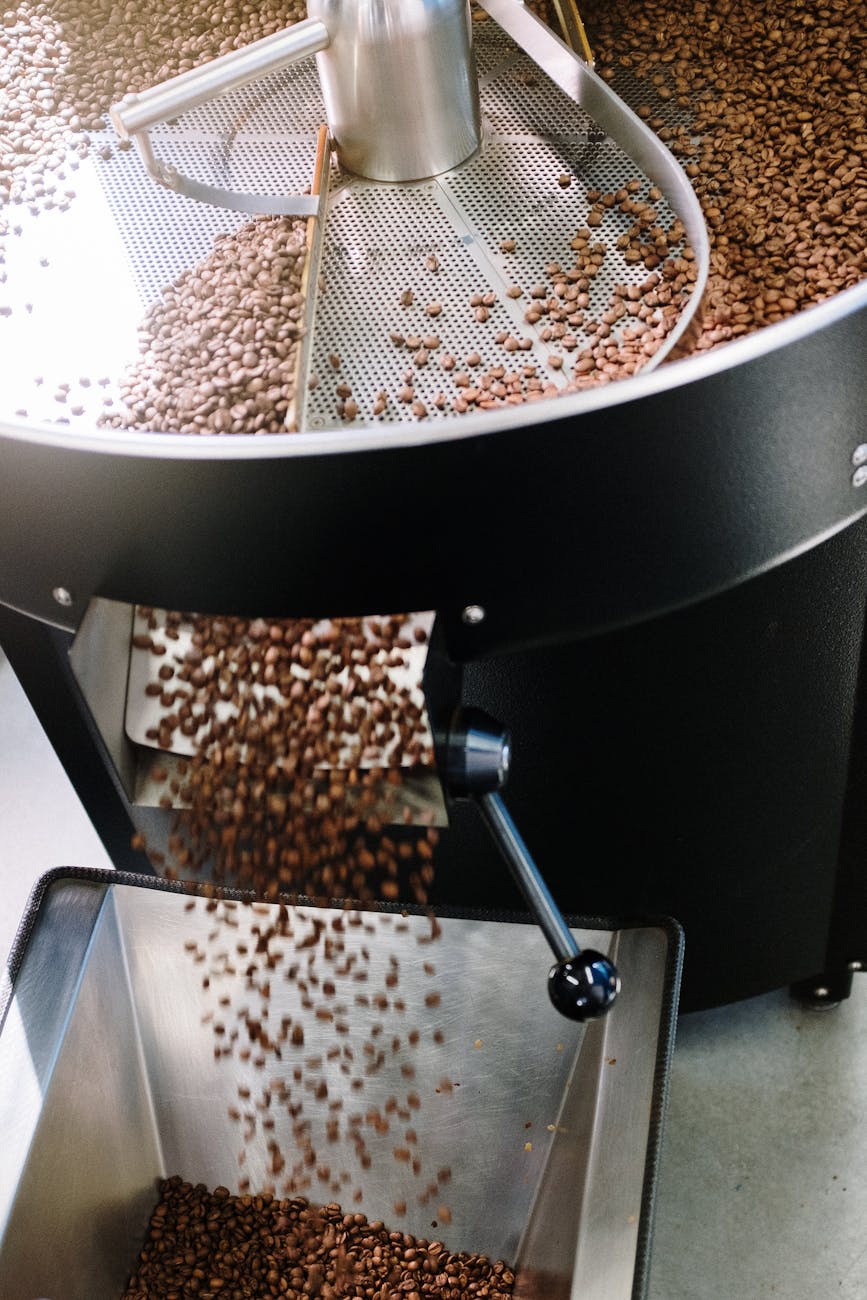
close-up of coffee beans roasting in an industrial machine, highlighting the roasting process.

’”Learn the art of roasting coffee at home with the right equipment – your journey to perfectly customized roasting starts here.”’

Basic equipment for home roasting

Understanding coffee beans

Coffee beans are the essential starting point for home roasting coffee. To begin, it is crucial to understand the different types of coffee beans available. The two main categories are Arabica and Robusta. Arabica beans are known for their complex flavors, acidity and aroma. They are usually more expensive and considered of higher quality. On the other hand, Robusta beans are stronger in flavor, have a higher caffeine content and a more bitter taste.

Choosing the right beans

When choosing coffee beans for home roasting, consider factors such as origin, processing method and degree of roasting. The origin of the beans can have a big impact on the flavor profile, as beans from different regions have distinct characteristics. The processing method, be it washed, natural or honey process, also affects the taste. In addition, the degree of roasting – light, medium or dark – determines the final taste and aroma of the coffee. On this page we have gathered further information on what to consider when choosing the beans and buying your green coffee.

Basic roasting appliances

There are several basic roasting appliances available for home coffee roasting enthusiasts. Popular options are stoves and popcorn machines, which provide an easy and affordable way to roast coffee beans. These machines allow manual control over the roasting process, making it easy to monitor the beans as they develop flavor. Another common choice is the hot air popcorn machine which uses hot air to evenly roast the beans. This method is quick and efficient, producing consistent results with minimal effort. In addition, some home roasters opt for a cast iron skillet or a dedicated coffee machine for roasting. These options provide more control over the roasting process and allow for experimentation with different roast profiles.

Advanced roasting equipment

For those who want to take their home coffee roasting to the next level, advanced roasting appliances are available. Drum roasters are a popular choice among serious home roasters, offering precise temperature control and even roasting. These machines are capable of handling larger batches of beans and producing professional, high-quality results. We have a drum roaster at the roastery, a Giesen that holds 30 kr of green coffee. Another advanced option is a fluidbed roaster that uses hot air to roast the beans in a chamber, resulting in a clean and even roast. Some home roasters are also investing in hybrid roasters that combine elements of drum and fluidbed roasters for optimal control and flavor development.

Customized roasters

Custom roasters are designed for coffee enthusiasts who want full control over every aspect of the roasting process. These machines often come with advanced features such as customizable temperature profiles, airflow control, and data recording capabilities. Some custom roasters are modular, allowing users to upgrade or modify various components to suit their specific roasting preferences. While these appliances tend to be more expensive, they offer unrivaled precision and flexibility to roast coffee beans to perfection. Home roasters who are passionate about the art of coffee roasting may find that investing in a customized appliance is worth the cost for the ultimate roasting experience.

Proper ventilation

Having a well-designed ventilation system is essential for home coffee roasting to ensure the removal of smoke and odors generated during the roasting process. A proper ventilation installation usually consists of an exhaust fan placed close to the roasting equipment to capture the smoke at the source. This fan should be powerful enough to effectively remove the smoke and direct it outside the roasting area. In addition, installing a range hood above the roasting equipment can help to further contain and eliminate smoke.

Smoke control measures

elegant coffee cup on a wooden table in a cozy setting in artvin, türkiye.
In addition to ventilation, the implementation of smoke control measures can improve the overall roasting experience and minimize the impact of smoke on the surrounding environment. One effective method is to use a smoke suppressant agent that helps neutralize and reduce the intensity of smoke produced during roasting. These agents can be added to the roasting chamber or extraction system to facilitate smoke control. In addition, regular cleaning and maintenance of the ventilation system can prevent the build-up of deposits and ensure optimal performance in smoke extraction.

Air quality monitoring

To maintain a safe and healthy roasting environment, it is important to regularly monitor air quality. This can be achieved by using air quality sensors that detect the presence of smoke particles and other pollutants in the air. By keeping track of air quality levels, roasters can make adjustments to their ventilation system or roasting techniques as necessary to mitigate any potential health risks associated with poor air quality. Investing in air quality monitoring equipment is a proactive approach to ensuring a controlled and safe roasting environment for both the roaster and those around them.

Use of a thermometer

Monitoring roasting progress is essential to achieve the desired flavor profile in your home coffee roasting. One of the essential tools for this purpose is a thermometer. By measuring the temperature inside the roasting chamber, you can follow how the beans develop during the roasting process. Different roasting profiles require precise temperature control at different stages, from the drying phase to the first crack and beyond. A thermometer allows you to make real-time adjustments to the heat source to ensure consistent and even roasting.

Observation of color changes

Another way to monitor roasting progress is to observe the color changes of the coffee beans. As the beans are roasted, they undergo physical transformations that are visible to the naked eye. Carefully observe the color shift from green to yellow, then to various shades of brown as roasting progresses. Experienced home roasters often use visual cues along with scent and sound to determine the optimal time to finish roasting. Remember that different coffee varieties exhibit unique color changes, so it’s important to familiarize yourself with the specific beans you’re roasting.

Listen for audible clues

In addition to using visual cues and a thermometer, listening for audible cues is another effective way to monitor roasting progress. During the roasting process, coffee beans go through distinct stages that can be identified by the sound they produce. The first crack, a popping sound similar to popcorn, indicates that the beans are reaching a crucial stage of development. Subsequent cracks (second crack) indicate that the beans are progressing towards a darker roast. By listening carefully to these audio cues, you can make informed decisions about when to stop roasting to achieve the desired flavor profile. Experimenting with different degrees of roast while listening to the sounds can help you improve your roasting skills over time. At White Elk, we never roast into a second crack.

Correct storage container

When it comes to storing your freshly roasted coffee beans, choosing the right container is crucial. Choose airtight containers that can keep out light, air, moisture and odors. Glass jars with rubber seals or specially designed coffee storage jars are excellent choices. These containers will help preserve the flavor and aroma of your coffee beans for a longer period of time. Avoid using transparent glass containers as they let in light, which can potentially degrade the quality of your coffee. HERE is another great article on how to best store your freshly roasted coffee.

Location and temperature

The storage location of your roasted coffee also plays a significant role in maintaining its freshness. Store your coffee in a cool, dark place away from direct sunlight, heat sources and moisture. Avoid storing coffee near the stove, oven or in the refrigerator as these areas can compromise the flavor and quality of your beans. Room temperature is ideal for preserving the freshness of your coffee beans.

Freshness monitoring

To ensure you enjoy your coffee at its best, it is important to regularly monitor the freshness of your beans. Keep an eye on the roast date and try to consume your coffee within a few weeks of roasting for optimal flavor. Consider labeling your containers with the roast date to help you keep track of freshness. Additionally, if your coffee beans start to lose their aroma and flavor, it may be time to consider roasting a fresh batch. By paying attention to these details, you can enjoy the full potential of your home-roasted coffee beans.
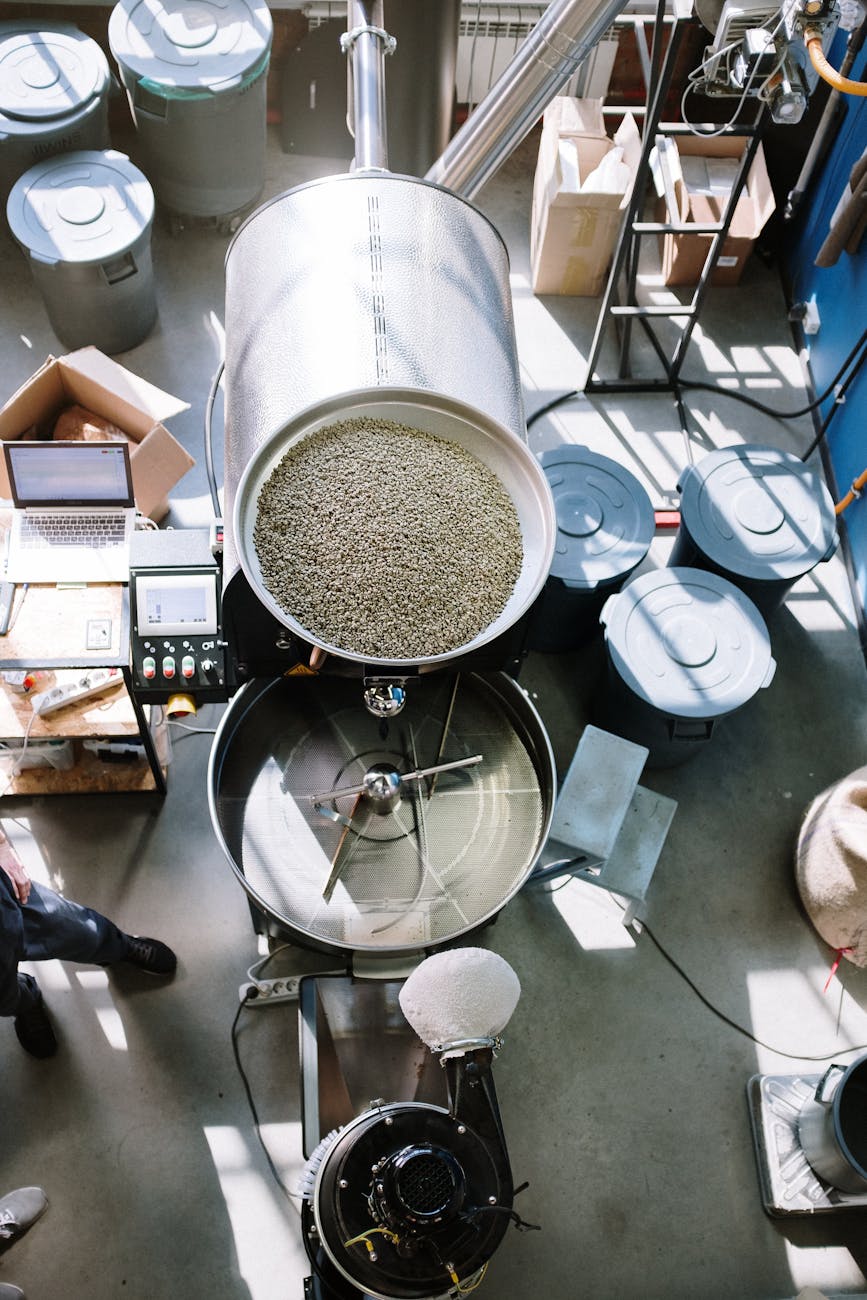
overhead view of industrial coffee roaster with raw beans in a workshop setting.

FAQ

  • ’What is the essential equipment needed for home coffee bean roasting?’’The essential equipment for home coffee roasting includes a coffee roaster, a fan, a thermometer, a scale, and storage containers.
  • ”Why is a coffee roaster important for home roasting?”’A coffee maker is essential for home roasting because it allows you to control the degree of roasting, temperature and time, resulting in customized and fresh coffee beans.
  • ’How does a fan contribute to the home roasting of coffee?’’A fan helps to quickly cool the roasted coffee beans after the roasting process, which is crucial to prevent over-roasting and preserve the flavors.
  • Why is a thermometer necessary for home roasting coffee?’A thermometer is essential to accurately monitor the roasting temperature, ensure consistency and help you achieve the desired roasting profile.
  • ’What role does a scale play in coffee hemi-roasting?’’A scale is essential for measuring the exact amount of green coffee beans and tracking the weight loss during roasting, which will enable you to replicate successful roasts.

Photo by cottonbro studio on Pexels
Photo by Emre Öztürk on Pexels
Photo by cottonbro studio on Pexels

Publicerad den

Grundläggande utrustning för hemmarostning

close-up of coffee beans roasting in an industrial machine, highlighting the roasting process.

’”Lär dig konsten att rosta kaffe hemma med rätt utrustning – din resa mot att perfekt anpassad rostning börjar här.”’

Grundläggande utrustning för hemmarostning

Förstå kaffebönor

Kaffebönor är det väsentliga startpunkten för hemmarostning av kaffe. För att börja är det avgörande att förstå de olika typerna av kaffebönor som finns tillgängliga. De två huvudkategorierna är Arabica och Robusta. Arabica-bönor är kända för sina komplexa smaker, syra och doft. De är vanligtvis dyrare och anses av högre kvalitet. Å andra sidan är Robusta-bönor starkare i smaken, har en högre koffeinhalt och en mer besk smak.

Välja rätt bönor

När du väljer kaffebönor för rostning hemma, överväg faktorer som ursprung, bearbetningsmetod och rostningsgrad. Ursprunget för bönorna kan ha stor påverkan på smakprofilen, då bönor från olika regioner har distinkta egenskaper. Bearbetningsmetoden, vare sig det är tvättat, naturligt eller honungsprocess, påverkar också smaken. Dessutom avgör rostningsgraden – ljus, mellan eller mörk – den slutliga smaken och doften av kaffet. På denna sida har vi samlat ytterligare information om vad du kan tänka på när du väljer bönorna och köper ditt råkaffe.

Grundläggande rostningsapparater

Det finns flera grundläggande rostningsapparater tillgängliga för entusiaster av hemmarostning av kaffe. Populära alternativ är spisar och popcornmaskiner, vilket ger ett enkelt och prisvärt sätt att rosta kaffebönor. Dessa maskiner tillåter manuell kontroll över rostningsprocessen, vilket gör det enkelt att övervaka bönorna när de utvecklar smak. Ett annat vanligt val är varmluftspopcornmaskin som använder varm luft för att jämnt rosta bönorna. Denna metod är snabb och effektiv, vilket ger konsekventa resultat med minimal ansträngning. Dessutom väljer vissa hemmarostare en gjutjärnspanna eller en dedikerad kaffemaskin för rostning. Dessa alternativ ger mer kontroll över rostningsprocessen och möjliggör experimenterande med olika rostprofiler.

Avancerade rostningsapparater

För de som vill ta sin hemmarostning av kaffe till nästa nivå finns avancerade rostningsapparater tillgängliga. Trumrostare är ett populärt val bland seriösa hemmarostare, erbjuder exakt temperaturkontroll och jämn rostning. Dessa maskiner klarar av att hantera större satser bönor och producera professionella resultat av hög kvalitet. Vi har en trumrost på rosteriet, en Giesen som rymmer 30 kr råkaffe. Ett annat avancerat alternativ är en fluidbed-rostare som använder varm luft för att rosta bönorna i en kammare, vilket resulterar i en ren och jämn rostning. Vissa hemmarostare investerar också i hybridrostmaskiner som kombinerar element från trum- och fluidbed-rostare för optimal kontroll och smakutveckling.

Anpassade rostningsapparater

Anpassade rostningsapparater är utformade för kaffeentusiaster som vill ha full kontroll över varje aspekt av rostningsprocessen. Dessa maskiner levereras ofta med avancerade funktioner som anpassningsbara temperaturprofiler, luftflödeskontroll och datainspelningsförmågor. Vissa anpassade rostare är modulära, vilket gör det möjligt för användare att uppgradera eller modifiera olika komponenter för att passa deras specifika rostningspreferenser. Även om dessa apparater tenderar att vara dyrare, erbjuder de en oöverträffad precision och flexibilitet för att rosta kaffebönor till perfektion. Hemmarostare som brinner för konsten att rosta kaffe kan finna att investera i en anpassad apparat är värt kostnaden för den ultimata rostningsupplevelsen.

Korrekt ventilation

Att ha ett välutformat ventilationssystem är avgörande för hemmarostning av kaffe för att säkerställa borttagning av rök och dofter som genereras under rostningsprocessen. En korrekt ventilationsinstallation består vanligtvis av en utsugningsfläkt som placeras nära rostningsutrustningen för att fånga röken vid källan. Denna fläkt bör vara tillräckligt kraftfull för att effektivt avlägsna röken och leda den utanför rostningsområdet. Dessutom kan installation av en köksfläkt ovanför rostningsutrustningen hjälpa till att ytterligare innehålla och eliminera rök.

Rökkontrollåtgärder

elegant coffee cup on a wooden table in a cozy setting in artvin, türkiye.
Förutom ventilation kan genomförandet av rökkontrollåtgärder förbättra den övergripande rostningsupplevelsen och minimera påverkan av rök på den omgivande miljön. En effektiv metod är att använda en rökundertryckande agent som hjälper till att neutralisera och minska intensiteten av rök som produceras under rostningen. Dessa agenter kan tillsättas i rostningskammaren eller utsugssystemet för att underlätta rökkontroll. Dessutom kan regelbunden rengöring och underhåll av ventilationssystemet förhindra uppbyggnaden av beläggningar och säkerställa optimal prestanda vid rökutsugning.

Övervakning av luftkvalitet

För att upprätthålla en säker och hälsosam rostningsmiljö är det viktigt att regelbundet övervaka luftkvaliteten. Detta kan uppnås genom att använda luftkvalitetssensorer som upptäcker närvaron av rökpartiklar och andra föroreningar i luften. Genom att hålla koll på luftkvalitetsnivåerna kan rostare göra justeringar i sitt ventilationssystem eller sina rostningstekniker vid behov för att mildra eventuella potentiella hälsorisker som är förknippade med dålig luftkvalitet. Att investera i luftkvalitetsövervakningsutrustning är ett proaktivt tillvägagångssätt för att säkerställa en kontrollerad och säker rostningsmiljö för både rostaren och de som är i närheten.

Användning av termometer

Att övervaka rostningsframsteg är avgörande för att uppnå önskad smakprofil i din hemmarostning av kaffe. Ett av de viktiga verktygen för detta ändamål är en termometer. Genom att mäta temperaturen inne i rostningskammaren kan du följa hur bönorna utvecklas under rostningsprocessen. Olika rostprofiler kräver exakt temperaturkontroll vid olika stadier, från torkningsfasen till första sprickan och därefter. En termometer gör det möjligt att göra justeringar i realtid på värmekällan för att säkerställa en konsekvent och jämn rostning.

Observation av färgförändringar

Ett annat sätt att övervaka rostningsframsteg är att observera färgförändringarna hos kaffebönorna. När bönorna rostas genomgår de fysiska transformationer som är synliga för blotta ögat. Observera noggrant färgskiftet från grönt till gult, sedan till olika nyanser av brunt när rostningen fortskrider. Erfarna hemmarostare använder ofta visuella ledtrådar tillsammans med doft och ljud för att avgöra optimal tidpunkt att avsluta rostningen. Kom ihåg att olika kaffesorter uppvisar unika färgförändringar, så det är viktigt att bekanta sig med de specifika bönor du rostar.

Lyssna efter hörbara ledtrådar

Förutom att använda visuella ledtrådar och en termometer är att lyssna efter hörbara ledtrådar ett annat effektivt sätt att övervaka rostningsframsteg. Under rostningsprocessen går kaffebönorna igenom distinkta stadier som kan identifieras genom ljudet de producerar. Första sprickan (crack), ett knäppande ljud som liknar popcorn, indikerar att bönorna når en avgörande utvecklingsfas. Efterföljande sprickor (second crack) indikerar att bönorna fortskrider mot en mörkare rostningsgrad. Genom att uppmärksamt lyssna på dessa ljudsignaler kan du fatta informerade beslut om när du ska avsluta rostningen för att uppnå önskad smakprofil. Att experimentera med olika rostningsgrader medan du lyssnar på ljuden kan hjälpa dig att förbättra dina rostningsfärdigheter över tiden. Hos oss på White Elk rostar vi aldrig in i ett second crack.

Korrekt förvaringsbehållare

När det gäller att lagra dina nyligen rostade kaffebönor är valet av rätt behållare avgörande. Välj lufttäta behållare som kan hålla borta ljus, luft, fukt och dofter. Glasburkar med gummiförseglingar eller särskilt utformade kaffeförvaringsburkar är utmärkta val. Dessa behållare kommer att hjälpa till att bevara smaken och doften av dina kaffebönor under en längre tid. Undvik att använda genomskinliga glasbehållare eftersom de släpper in ljus, vilket potentiellt kan försämra kvaliteten på ditt kaffe. HÄR finner du en annan fin artikel om hur du bäst förvarar ditt nyrostade kaffe.

Plats och temperatur

Förvaringsplatsen för ditt rostade kaffe spelar också en betydande roll för att bibehålla dess färskhet. Förvara ditt kaffe på en sval, mörk plats borta från direkt solljus, värmekällor och fukt. Undvik att förvara kaffe nära spisen, ugnen eller i kylskåpet eftersom dessa områden kan kompromissa med smaken och kvaliteten på dina bönor. Rumstemperatur är idealisk för att bevara färskheten hos dina kaffebönor.

Färskhetsövervakning

För att säkerställa att du njuter av ditt kaffe på bästa sätt är det viktigt att regelbundet övervaka färskheten hos dina bönor. Håll koll på rostdatumet och försök att konsumera ditt kaffe inom några veckor efter rostning för optimal smak. Överväg att märka dina behållare med rostdatumet för att hjälpa dig hålla koll på färskheten. Dessutom, om dina kaffebönor börjar förlora sin arom och smak, kan det vara dags att överväga att rosta en färsk sats. Genom att vara uppmärksam på dessa detaljer kan du njuta av hela potentialen hos dina hemrostat kaffebönor.
overhead view of industrial coffee roaster with raw beans in a workshop setting.

FAQ

  • ’Vad är de väsentliga utrustningarna som behövs för hemmabaserad kaffebönorrostning?’’The essential equipment for home coffee roasting includes a coffee roaster, a fan, a thermometer, a scale, and storage containers.’
  • ”Varför är en kafferostare viktig för hemroster?”’A kaffebryggare är avgörande för hemroster eftersom den låter dig kontrollera rostningsgraden, temperaturen och tiden, vilket resulterar i anpassade och färska kaffebönor.’
  • ’På vilket sätt bidrar en fläkt till hemrostningen av kaffe?’’A fläkt hjälper till att snabbt kyla de rostade kaffebönorna efter rostningsprocessen, vilket är avgörande för att förhindra överrostning och bevara smakerna.’
  • Varför är en termometer nödvändig för hemrostande av kaffe?’A termometer är avgörande för att noggrant övervaka rostningstemperaturen, säkerställa konsistens och hjälpa dig att uppnå önskad rostningsprofil.’
  • ’Vilken roll spelar en våg i hemorrostering av kaffe?’’A skala är viktig för att mäta den exakta mängden gröna kaffebönor och spåra viktförlusten under rostningen, vilket gör det möjligt för dig att replikera framgångsrika rostningar.’

Photo by cottonbro studio on Pexels
Photo by Emre Öztürk on Pexels
Photo by cottonbro studio on Pexels

Publicerad den

The magic of Dalgona coffee: a step-by-step guide

close-up of a frothy dalgona coffee on a stylish wooden coaster with a rustic design.

’”Discover the art of creating the perfect Dalgona coffee, where every whisk brings you closer to a moment of pure pleasure.”’

The magic of Dalgona coffee: a step-by-step guide

Exploring the origins of Dalgona coffee

Dalgona coffee, a trend that took the world by storm, has its roots deeply rooted in South Korean culture. The name ”Dalgona” comes from a traditional Korean sugar caramel known for its sweet and airy texture. This popular drink gained widespread attention after going viral on social media platforms, captivating coffee enthusiasts with its visually appealing layers and rich flavors.

Interestingly, the concept of Dalgona coffee is not entirely new. Similar whipped coffee drinks have been enjoyed in different cultures for decades, but it was the simplicity and accessibility of the recipe for Dalgona that made it a global sensation. The rise of homemade coffee culture, especially during the lockdown era, further contributed to the popularity of this frothy blend.

The craft behind Dalgona coffee

Creating the perfect Dalgona coffee requires care and patience. The key ingredients for the original include instant coffee, sugar, hot water and milk. Instant coffee, we know how we like it here at White Elk Coffee and in any situation where we can avoid it, we do! Choose one of our espressos instead. You can find these HERE. By whisking these components together in a specific proportion, a velvety smooth coffee foam is achieved. The careful whisking process is crucial as it transforms the mixture into a light and fluffy consistency that can be easily layered on top of milk.

In addition, the art of layering plays a significant role in the presentation of Dalgona coffee. By gently pouring the frothy blend over chilled or hot milk, a striking two-tone effect is created that enhances the overall sensory experience. The contrast between the creamy milk base and the frothy coffee layer offers a delightful blend of textures and flavors.

Customize your Dalgona coffee experience

One of the most appealing aspects of Dalgona coffee is its versatility. While the classic recipe calls for a simple blend of coffee, sugar, water and milk, enthusiasts have embraced creative variations to suit their preferences. For those seeking a decadent twist, the addition of flavored syrups, spices or extracts can raise the flavor profile of the drink.

In addition, Dalgona coffee can be customized to suit dietary restrictions or personal taste preferences. Options such as using plant-based milk alternatives, adjusting the sweetness level or experimenting with different coffee blends offer endless possibilities to create a personalized Dalgona coffee experience. Whether you prefer a traditional approach or like to experiment with unique flavor combinations, Dalgona coffee invites creativity and exploration in every cup.

The captivating origins

Believed to have originated in South Korea, Dalgona coffee quickly gained popularity worldwide. The name ”Dalgona” actually comes from a type of Korean honeycomb, known for its sweet and creamy taste. The trend of making Dalgona coffee at home started in the early 2020s as people sought ways to recreate cafe-like drinks during lockdown time.

What sets Dalgona coffee apart is its visually appealing layered look, with a frothy whipped coffee blend on top of cold or hot milk. This aesthetic presentation, combined with the simplicity of making it with just a few simple ingredients, contributed to its rapid popularity on social media platforms like TikTok and Instagram.

The viral sensation

As more and more people experimented with making Dalgona coffee and shared their creations online, the trend spread like wildfire. The hashtag #DalgonaCoffee started trending on various social media platforms, leading to an increase in interest and participation. Influencers and celebrities also jumped on the trend, further contributing to its popularity.

The attraction of Dalgona coffee lies not only in its visual appeal but also in its versatility. Coffee lovers have taken to customizing the recipe by adding different flavors, such as caramel or chocolate, or using alternative types of milk such as almond or oat milk. This adaptability has contributed to its wide popularity among a diverse audience.

The global phenomenon

What started as a simple trend in South Korea quickly turned into a global phenomenon, with people from all corners of the world trying to make Dalgona coffee. The simplicity of the recipe, which calls for equal parts instant coffee, sugar and hot water whisked until frothy, made it accessible to coffee enthusiasts of all skill levels.

From Asia to Europe to the Americas, Dalgona coffee became a symbol of unity during a time of uncertainty and isolation. It served as a creative outlet for many individuals sitting at home, allowing them to connect virtually with others through a shared love for this wonderful and easy-to-make beverage.

Key ingredients for the perfect Dalgona coffee

When it comes to creating the perfect Dalgona coffee, the key lies in choosing high-quality ingredients that will elevate the flavor profile of this trendy beverage. One of the most crucial components is instant coffee. Choose a good quality instant coffee that boasts a rich and robust flavor. The type of instant coffee you choose will have a great impact on the final taste of your Dalgona coffee.

delicious creamy coffee topped with cinnamon dalgona foam, perfect for autumn mornings.

Sweeteners and flavor enhancers

Another essential ingredient to achieve the characteristic sweet and creamy texture of Dalgona coffee is sugar. You can use regular granulated sugar, brown sugar or even alternatives such as honey or maple syrup depending on your preferences. In addition, consider adding a dash of vanilla extract or flavored syrups to enhance the overall taste of your Dalgona coffee.

The role of milk and semen

For the base of your Dalgona coffee, the choice of milk or cream is crucial. Whole milk will provide a rich and creamy texture, while plant-based options such as almond milk or oat milk can offer a lighter and nuttier flavor profile. Experiment with different types of milk to find the perfect balance to suit your taste preferences. Plus, you can top your Dalgona coffee with a pinch of cocoa or cinnamon for an extra layer of flavor complexity.

The master of the art of whisking

To achieve the perfect whipped coffee, start by using equal parts instant coffee, sugar and hot water. The ideal ratio is 1:1:1 to ensure a balanced taste and the right consistency. When whisking the ingredients together, it is crucial to use a hand whisk, electric whisk or even a simple whisk for a powerful and continuous whisking process. The key is to create a thick and creamy texture with stiff peaks forming, similar to whipped cream.

Understanding the whipping technique

When whisking the coffee mixture, pay attention to the color change from dark brown to a light, frothy caramel color. This change indicates that air is being incorporated into the mixture, resulting in the desired fluffy texture. Be patient during the whipping process, as it can take anywhere from 5 to 10 minutes to achieve the perfect whipped coffee texture.

Test for the right consistency

To test if the whisked coffee is ready, lift the whisk or blender from the mixture and observe the peaks that form. If the peaks retain their shape and do not immediately dissolve back into the mixture, then your whipped coffee is ready to serve. The consistency should be thick enough to spoon onto milk or a milk alternative without sinking or immediately blending in, providing a lovely contrast in both texture and flavor.

Improving the flavor profile

To elevate your Dalgona coffee experience, consider experimenting with different types of coffee beans to enhance the flavor profile. Choose high-quality, freshly ground coffee beans for a richer and more aromatic brew. You can also try mixing different coffee bean varieties to create a unique blend that suits your taste preferences.

Further, consider including flavor enhancements like a dash of vanilla extract, a pinch of cinnamon or a twist of citrus zest to add depth and complexity to your Dalgona coffee. These simple additions can elevate your coffee to the next level and offer a delightful sensory experience.

Perfecting the texture

Texture plays a crucial role in the overall enjoyment of Dalgona coffee. To achieve a velvety smooth and creamy texture, make sure you whisk the coffee blend to stiff peaks with equal parts coffee, sugar and hot water. Take your time to whisk the mixture thoroughly until it reaches a thick and luscious consistency.

Further, consider adjusting the proportion of ingredients to customize the texture according to your preferences. If you prefer a lighter and airier texture, you can slightly increase the amount of hot water. On the other hand, if you prefer a denser and more decadent texture, you can reduce the amount of water for a more robust coffee experience.

Explore garnishing options

Garnishes can not only enhance the visual appeal of your Dalgona coffee but also add an extra layer of flavor complexity. Try using different garnishes such as chocolate chips, caramel strands or crushed nuts to create a visually impressive and delicious drink.

Further, consider including whipped cream, a pinch of cocoa or a dollop of flavored syrup to elevate the presentation and taste of your Dalgona coffee. By exploring different garnish options, you can customize your coffee creation to suit your mood and occasion, making each cup a unique and delightful experience.

’
elegant latte art in a glass cup on a rustic wooden table, indoor cafe setting.

FAQ

  • ’What is Dalgona coffee? Dalgona coffee is a whipped coffee drink made by whisking together instant coffee, sugar and hot water to create a frothy mixture that is then poured over milk. It became popular on social media as a trendy and visually appealing coffee drink.’
  • ’How do you make Dalgona coffee hema? To make Dalgona coffee at home, mix equal parts instant coffee, sugar and hot water in a bowl. Whisk the mixture vigorously with a hand whisk or electric whisk until it becomes thick and frothy. Pour the whisked coffee over a glass of milk and enjoy!’

  • ’Can I use a different type of coffee for Dalgona coffee?’’Although traditional Dalgona coffee is made with instant coffee, you can experiment with using different types of coffee such as espresso powder or finely ground coffee. Just remember that the texture and taste may vary depending on the coffee you choose.
  • ’Should Dalgona coffee have a lot of caffeine in it?’Dalgona coffee can be high in caffeine, especially if you use a strong instant coffee or espresso beans. The amount of caffeine in Dalgona coffee depends on the type and amount of coffee used in the recipe. It is best to enjoy it in moderation if you are sensitive to caffeine.’
  • ’Can I customize Dalgona coffee with flavors?’Yes, you can customize Dalgona coffee with different flavors to suit your preferences. Add a dash of vanilla extract, cinnamon, chocolate syrup or flavored syrups to the whipped coffee blend for a unique twist. Be creative and experiment with different flavor combinations!

Photo by khats cassim on Pexels
Photo by Maria Georgieva on Pexels
Photo by Burak Evlivan on Pexels

Publicerad den

Magin med Dalgona-kaffe: En steg-för-steg-guide

close-up of a frothy dalgona coffee on a stylish wooden coaster with a rustic design.

’”Upptäck konsten att skapa det perfekta Dalgona-kaffet, där varje visp tar dig närmare en stund av ren njutning.”’

Magin med Dalgona-kaffe: En steg-för-steg-guide

Utforska ursprunget av Dalgona-kaffe

Dalgona-kaffe, en trend som tog världen med storm, har sina rötter djupt förankrade i sydkoreansk kultur. Namnet ”Dalgona” härstammar från en traditionell koreansk sockerkaramell känd för sin söta och luftiga textur. Denna populära dryck fick stor uppmärksamhet efter att ha blivit viral på sociala medieplattformar och fängslade kaffeentusiaster med sina visuellt tilltalande lager och rika smaker.

Intressant nog är konceptet med Dalgona-kaffe inte helt nytt. Liknande vispad kaffedrycker har njutits i olika kulturer i årtionden, men det var den enkelhet och tillgängligheten hos receptet för Dalgona som gjorde det till en global sensation. Uppkomsten av hemlagad kaffekultur, särskilt under låsningstiden, bidrog ytterligare till populariteten av denna skummiga blandning.

Hantverket bakom Dalgona-kaffe

För att skapa det perfekta Dalgona-kaffet krävs noggrannhet och tålamod. De viktigaste ingredienserna för originalet inkluderar snabbkaffe, socker, varmt vatten och mjölk. Snabbkaffe, det vet vi vad vi tycker om här på White Elk Coffee och i alla lägen då vi kan undvika det så gör vi det! Välj istället en av våra espressos. Dessa finner du HÄR. Genom att vispa dessa komponenter tillsammans i en specifik proportion uppnås ett sammetsslätt kaffeskum. Den noggranna vispningsprocessen är avgörande eftersom den omvandlar blandningen till en lätt och fluffig konsistens som enkelt kan läggas i lager ovanpå mjölk.

Dessutom spelar konsten att lägga i lager en betydande roll i presentationen av Dalgona-kaffe. Genom att försiktigt hälla den skummiga blandningen över kyld eller varm mjölk skapas en slående tvåtonseffekt som förbättrar den totala sensoriska upplevelsen. Kontrasten mellan den krämiga mjölkbasen och det skummiga kaffelagret erbjuder en härlig blandning av texturer och smaker.

Anpassa din Dalgona-kaffeupplevelse

En av de mest tilltalande aspekterna med Dalgona-kaffe är dess mångsidighet. Medan det klassiska receptet kräver en enkel blandning av kaffe, socker, vatten och mjölk, har entusiaster omfamnat kreativa variationer för att passa deras preferenser. För de som söker en dekadent twist kan tillsats av smaksatt sirap, kryddor eller extrakt höja smakprofilen på drycken.

Dessutom kan Dalgona-kaffe anpassas för att passa dietrestriktioner eller personliga smakpreferenser. Alternativ som att använda växtbaserade mjölkalternativ, justera sötmanivån eller experimentera med olika kaffeblandningar erbjuder oändliga möjligheter att skapa en personlig Dalgona-kaffeupplevelse. Oavsett om du föredrar ett traditionellt tillvägagångssätt eller gillar att experimentera med unika smakkombinationer, bjuder Dalgona-kaffe in till kreativitet och utforskning i varje kopp.

De fängslande ursprungen

Tros ha sitt ursprung i Sydkorea, fick Dalgona-kaffe snabbt popularitet över hela världen. Namnet ”Dalgona” kommer faktiskt från en typ av koreansk honungskaka, känd för sin söta och krämiga smak. Trenden att göra Dalgona-kaffe hemma startade i början av 2020 när människor sökte sätt att återskapa caféliknande drycker under låsningstiden.

Vad som skiljer Dalgona-kaffe åt är dess visuellt tilltalande lagerlook, med en skummig vispad kaffeblandning ovanpå kall eller varm mjölk. Denna estetiska presentation, kombinerad med enkelheten att göra den med bara några enkla ingredienser, bidrog till dess snabba popularitet på sociala medieplattformar som TikTok och Instagram.

Den virala sensationen

När allt fler människor experimenterade med att göra Dalgona-kaffe och delade sina skapelser online spreds trenden som en löpeld. Hashtaggen #DalgonaCoffee började trenda på olika sociala medieplattformar, vilket ledde till en ökning av intresse och deltagande. Influencers och kändisar hoppade också på trenden och bidrog ytterligare till dess popularitet.

Attraktionen med Dalgona-kaffe ligger inte bara i dess visuella tilltalande utan också i dess mångsidighet. Kaffeälskare har tagit till sig att anpassa receptet genom att lägga till olika smaker, som karamell eller choklad, eller använda alternativa typer av mjölk som mandel- eller havremjölk. Denna anpassningsbarhet har bidragit till dess breda popularitet bland en mångfaldig publik.

Den globala fenomenet

Vad som började som en enkel trend i Sydkorea förvandlades snabbt till en global fenomen, där människor från alla hörn av världen försökte göra Dalgona-kaffe. Receptets enkelhet, som kräver lika delar snabbkaffe, socker och varmt vatten vispat tills det blir skummande, gjorde det tillgängligt för kaffeentusiaster på alla kunskapsnivåer.

Från Asien till Europa till Amerika blev Dalgona-kaffe en symbol för enhet under en tid av osäkerhet och isolering. Det fungerade som en kreativ utlopp för många individer som satt hemma, vilket gjorde det möjligt för dem att ansluta virtuellt med andra genom en delad kärlek för denna underbara och lättlagade dryck.

Nyckelingredienser för det perfekta Dalgona-kaffet

När det handlar om att skapa det perfekta Dalgona-kaffet ligger nyckeln i att välja högkvalitativa ingredienser som kommer att höja smakprofilen på denna trendiga dryck. En av de mest avgörande komponenterna är snabbkaffe. Välj en bra kvalitet snabbkaffe som skryter med en rik och robust smak. Typen av snabbkaffe du väljer kommer att ha stor inverkan på slutsmaken av ditt Dalgona-kaffe.

delicious creamy coffee topped with cinnamon dalgona foam, perfect for autumn mornings.

Sötningsmedel och smakförstärkare

En annan väsentlig ingrediens för att uppnå den karakteristiska söta och krämiga texturen hos Dalgona-kaffe är socker. Du kan använda vanligt granulerat socker, farinsocker eller till och med alternativ som honung eller lönnssirap beroende på dina preferenser. Dessutom kan du överväga att tillsätta en gnutta vaniljextrakt eller smaksatta siraper för att förbättra den totala smaken på ditt Dalgona-kaffe.

Mjölkens och grämmets roll

För basen av ditt Dalgona-kaffe är valet av mjölk eller grädde avgörande. Helt mjölk kommer att ge en rik och krämig textur, medan växtbaserade alternativ som mandelmjölk eller havremjölk kan erbjuda en lättare och nötigare smakprofil. Prova med olika typer av mjölk för att hitta den perfekta balansen som passar dina smakpreferenser. Dessutom kan du toppa ditt Dalgona-kaffe med en nypa kakao eller kanel för en extra lager av smakkomplexitet.

Mästaren av vispningens konst

För att uppnå det perfekta vispade kaffet, börja med att använda lika delar snabbkaffe, socker och varmt vatten. Den idealiska proportionen är 1:1:1 för att säkerställa en balanserad smak och rätt konsistens. När du vispar ihop ingredienserna är det avgörande att använda en handvisp, elvisp eller till och med en enkel visp för en kraftfull och kontinuerlig vispningsprocess. Nyckeln är att skapa en tjock och krämig textur med styva toppar som bildas, liknande vispad grädde.

Förstå vispningstekniken

När du vispar kaffeblandningen, uppmärksamma färgförändringen från mörkbrun till en ljus, skummig karamellfärg. Denna förändring indikerar att luft inkorporeras i blandningen, vilket resulterar i den önskade fluffiga konsistensen. Var tålmodig under vispningsprocessen, eftersom det kan ta någonstans från 5 till 10 minuter att uppnå den perfekta vispade kaffetexturen.

Testa för rätt konsistens

För att testa om det vispade kaffet är klart, lyft vispen eller mixern från blandningen och observera topparna som bildas. Om topparna behåller sin form och inte omedelbart löses upp tillbaka i blandningen, då är ditt vispade kaffe redo att serveras. Konsistensen bör vara tillräckligt tjock för att skedas på mjölk eller en mjölkalternativ utan att sjunka eller omedelbart blanda in sig, vilket ger en härlig kontrast i både textur och smak.

Förbättra smakprofilen

För att lyfta din Dalgona-kaffeupplevelse, överväg att experimentera med olika typer av kaffebönor för att förbättra smakprofilen. Välj högkvalitativa, färskmalet kaffebönor för en rikare och mer aromatisk bryggning. Du kan också prova att blanda olika kaffebönsorter för att skapa en unik blandning som passar dina smakpreferenser.

Ytterligare, överväg att inkludera smakförstärkningar som en skvätt vaniljextrakt, en nypa kanel eller en twist av citrusskal för att lägga till djup och komplexitet till ditt Dalgona-kaffe. Dessa enkla tillsatser kan lyfta ditt kaffe till nästa nivå och erbjuda en härlig sensorisk upplevelse.

Perfektionera texturen

Textur spelar en avgörande roll för den övergripande njutningen av Dalgona-kaffe. För att uppnå en sammetsslen och krämig textur, se till att du vispar kaffeblandningen till styva toppar med lika delar kaffe, socker och varmt vatten. Ta din tid att vispa blandningen noggrant tills den når en tjock och ljuvlig konsistens.

Ytterligare, överväg att justera proportionen av ingredienser för att anpassa texturen efter dina preferenser. Om du föredrar en lättare och luftigare textur kan du öka mängden varmt vatten något. Å andra sidan, om du föredrar en tätare och mer dekadent textur, kan du minska mängden vatten för en mer robust kaffeupplevelse.

Utforska garneringsalternativ

Garnityr kan inte bara förbättra den visuella attraktionen hos ditt Dalgona-kaffe utan också lägga till en extra lager av smakkomplexitet. Prova med olika garnityr som chokladflis, karamellsträngar eller krossade nötter för att skapa en visuellt imponerande och läcker dryck.

Ytterligare, överväg att inkludera vispad grädde, en nypa kakao eller en klick smaksatt sirap för att lyfta presentationen och smaken på ditt Dalgona-kaffe. Genom att utforska olika garneringsalternativ kan du anpassa din kaffeskreation för att passa din sinnesstämning och tillfälle, vilket gör varje kopp till en unik och härlig upplevelse.

’
elegant latte art in a glass cup on a rustic wooden table, indoor cafe setting.

FAQ

  • ’Vad är Dalgona-kaffe?’ Dalgona-kaffe är en vispad kaffedryck som görs genom att vispa ihop snabbkaffe, socker och hett vatten för att skapa en skummig blandning som sedan hälls över mjölk. Den blev populär på sociala medier som en trendig och visuellt tilltalande kaffedryck.’
  • ’Hur gör du Dalgona-kaffe hema?’ Till att göra Dalgona-kaffe hemma, blanda lika delar snabbkaffe, socker och varmt vatten i en skål. Vispa blandningen kraftigt med en handvisp eller elvisp tills den blir tjock och skummande. Häll det vispade kaffet över ett glas mjölk och njut!’

  • ’Kan jag använda en annan typ av kaffe för Dalgona-kaffe?’’Även om traditionellt Dalgona-kaffe görs med snabbkaffe, kan du experimentera med att använda olika typer av kaffe som espressopulver eller finmalt kaffe. Kom bara ihåg att texturen och smaken kan variera beroende på vilket kaffe du väljer.’
  • ’Ska Dalgona-kaffe ha mycket koffein i sig?’Dalgona-kaffe kan vara koffeinrikt, särskilt om du använder ett starkt snabbkaffe eller espressbönor. Mängden koffein i Dalgona-kaffe beror på typ och mängd kaffe som används i receptet. Det är bäst att njuta av det med måtta om du är känslig för koffein.’
  • ’Kan jag anpassa Dalgona-kaffe med smaker?’Yes, du kan anpassa Dalgona-kaffe med olika smaker för att passa dina preferenser. Lägg till en skvätt vaniljextrakt, kanel, chokladsirap eller smaksatta siraper till den vispade kaffeblandningen för en unik twist. Var kreativ och experimentera med olika smakkombinationer!

Photo by khats cassim on Pexels
Photo by Maria Georgieva on Pexels
Photo by Burak Evlivan on Pexels

Publicerad den

Pregnant and decaffeinated: safe for you and the baby?

Is decaffeinated coffee during pregnancy safe for you?
Safe caffeine-free options for pregnant women

”Choosing decaf during pregnancy is an easy way to prioritize both your health and your baby’s well-being.”

Decaf during pregnancy – a briefing for you and your baby

Decaf during pregnancy is a topic that many expectant mothers wonder about.
This article aims to provide clarity on whether decaf, or decaffeinated coffee, is a safe choice for pregnant women.
When it comes to making decisions about what is good for both mother and baby, information is key.
Many women wonder whether they should limit their caffeine intake, and if so, how much caffeine is safe.

Pregnancy can affect caffeine intake due to changes in the body’s metabolism.
When a woman is pregnant, caffeine is broken down more slowly in the body.
This means that caffeine stays in the bloodstream longer and can be passed on to the baby.
It is important to be aware of how caffeine can affect pregnancy to make informed choices.

Caffeine and the baby in your tummy

Caffeine is a stimulant found in a variety of plants, including coffee, cocoa and guarana.
During pregnancy, caffeine is broken down more slowly because the liver’s ability to metabolize it is reduced.
In addition, caffeine can pass through the placenta and into the bloodstream of the growing baby, making its impact even more important to understand.

According to the American College of Obstetricians and Gynecologists (ACOG), pregnant women are advised to limit their caffeine intake to no more than 200 mg per day from all sources.
This is roughly equivalent to one cup (240 mL) of brewed black regular coffee, which contains 96 mg of caffeine.
High caffeine intake has been linked to various health risks, such as low birth weight, growth retardation, miscarriage and increased risk of childhood obesity.

How is caffeine affected during pregnancy?

The body handles caffeine differently when you are pregnant.
This is because the liver, which usually breaks down caffeine, works more slowly, thus prolonging the presence of caffeine in the bloodstream.
When caffeine passes through the placenta and reaches the baby, which cannot handle caffeine in the same way as an adult, it can negatively affect fetal development.

For example, research has shown that heavy caffeine consumption during pregnancy can lead to low birth weight and growth retardation, which in turn can affect the health of the baby in both the short and long term.
Therefore, it is particularly important for pregnant women to be aware of their caffeine intake and make informed choices.

How much caffeine is in decaf?

”Decaf” stands for decaffeinated and refers to coffee where at least 97% of the caffeine has been removed from the beans during processing.
To understand the amount of caffeine in decaf, it is helpful to compare it to regular coffee.
One cup (240 mL) of brewed black regular coffee contains about 96 mg of caffeine, while one cup (240 mL) of decaf coffee contains about 2.4 mg of caffeine.
A decaf espresso (60 mL) contains around 0.6 mg of caffeine compared to a regular espresso which contains around 127 mg of caffeine per 60 mL serving.

Despite the lower caffeine content of decaf coffee, it is considered safe to drink in moderate amounts during pregnancy.
There are no official guidelines on decaf coffee and pregnancy, but as caffeine levels are very low, it is mostly considered safe for pregnant women.

Varying amounts of caffeine in decaf

It is important to note that the amount of caffeine in decaf can vary between different brands and brewing methods.
Some brands may contain more caffeine than others, so it is worth checking specific products.
When it comes to ensuring the lowest possible caffeine intake during pregnancy, it is good to read labels and choose brands that specify their caffeine levels clearly.

If you are unsure which decaf product has the lowest caffeine, you can always consult a healthcare provider or do your own research.
Being aware of these variations can help you make safer choices for you and your baby.

Options for a completely caffeine-free life during pregnancy

If you prefer to avoid caffeine altogether during pregnancy, there are several completely caffeine-free drink options that can be both safe and enjoyable.
Many plants, herbs and fruits can be used to make drinks that satisfy your taste buds without caffeine content.
Here are some examples:

Fresh juice blends, herbal teas and fruit teas are popular options.
Pregnancy-safe herbal drinks such as rooibos tea and ginger tea offer a great taste experience without the risk of caffeine intake.
Additional options include warm lemon and honey drinks, which are both soothing and beneficial to health.

Herbal teas and other warming drinks

When it comes to herbal teas, it is important to choose varieties that are known to be safe for pregnant women.
Some examples of such herbal teas are red rooibos tea, peppermint tea and chamomile tea.
These teas not only offer a delightful taste experience, but also have positive health effects, such as relaxation and improved digestion.

In addition to herbal teas, there are other warming drinks that can be appealing during pregnancy, such as warm fruit juices and sugar-free hot chocolates.
Adding a dash of honey or lemon can make these drinks even more enjoyable and healthy.

Is decaf the safe choice?

Overall, research and expert opinion show that decaf coffee is a safe option for pregnant women, as long as it is consumed in moderate amounts.
Although decaf still contains small amounts of caffeine, the level is significantly lower than in regular coffee.
Many experts consider that the low amount of caffeine does not pose a significant risk to pregnant women.

Moderation and balance are the key words when it comes to decaffeinated coffee during pregnancy.
By sticking to recommended amounts and being aware of the caffeine content of different decaf products, pregnant women can enjoy their coffee experience without unnecessary stress or worry.

If you choose to drink decaf

For pregnant women thinking about switching to or continuing with decaf, there are some concrete tips to keep in mind.
Firstly, always choose high-quality decaf coffee that clearly indicates the caffeine content.
This will help you keep track of your caffeine intake and avoid surprises.

Secondly, consider alternating your decaf consumption with completely decaffeinated alternatives to keep caffeine levels low.
This could include herbal teas, fruit teas or other decaffeinated drinks as mentioned earlier.
Finally, always listen to your body and consult your doctor if you have any questions or concerns regarding your caffeine intake during pregnancy.

Decaffeinated during pregnancy – our conclusion

By understanding how caffeine affects the body during pregnancy and making informed choices about caffeine intake, pregnant women can feel safer and more informed.
Choosing decaf during pregnancy can be a great way to still enjoy a hot drink without the potential risks that high caffeine levels can bring.
The important thing is to listen to your body and always consult with your doctor to ensure you make the best choice for you and your baby.

FAQ – Pregnant and decaffeinated: safe for you and the baby?

How much caffeine is ingested when drinking decaf coffee during pregnancy?

A brewed cup (240 mL) of decaf coffee contains approximately 2.4 mg of caffeine.
Compared to regular brewed coffee, which contains about 96 mg of caffeine per cup, the amount of caffeine in decaf coffee is significantly lower and is thus considered a safe option in moderate amounts during pregnancy.

Is it safe to consume caffeine in the form of tea or chocolate during pregnancy?

It is recommended that pregnant women limit their caffeine intake to a maximum of 200 mg per day from all sources, including tea and chocolate.
Thus, it is safe to consume these in small amounts, but it is important to pay attention to the total amount of caffeine consumed.

Can decaf coffee still affect the baby in the womb?

Decaf coffee still contains small amounts of caffeine and, although in much lower amounts than regular coffee, it could theoretically have an impact on the baby in the womb.
However, as the levels are significantly lower and below what is considered safe, the risk of adverse effects is minimal with moderate consumption.

Why is it important to choose pregnancy-safe herbal teas if you want to avoid caffeine completely?

Some herbs can have stimulant or other negative effects on pregnancy, so it is important to choose herbal teas that are known to be safe for pregnant women when you want to avoid caffeine completely.
Rooibos tea, peppermint tea, and chamomile tea are examples of safe options that do not contain caffeine.

How should you manage your caffeine intake if you are used to drinking a lot of coffee during pregnancy?

It is recommended for pregnant women to gradually reduce their caffeine intake to avoid withdrawal symptoms.
Switching to decaf alternatives and supplementing individual drinks with fully decaffeinated beverages such as herbal teas can help manage caffeine intake and stay within the recommended 200 mg per day.

Photo by Yan Krukau on Pexels

Photo by Ivan Samkov on Pexels

Photo by Amina Filkins on Pexels

Continue reading

Publicerad den

Coffee and health: anti-inflammatory or villain?

Coffee and inflammation: friend or foe?
coffee inflammation antioxidants reduce inflammation protects against diseases type 2 diabetes heart disease genetic factors consumption patterns decaffeinated coffee sensitive individuals

”Research on coffee and inflammation shows that moderate coffee consumption may have anti-inflammatory effects, which may contribute to a healthier lifestyle.”

A love affair with beans: coffee and its impact on our body

Coffee is one of the most consumed beverages in the world and holds a special place in the hearts of many people.
Not only does it energize us and help us stay awake, but it has also been shown to have a range of potential health benefits.
What does science say about coffee and its impact on our health, especially when it comes to inflammation?

Previous research has shown that coffee contains a variety of beneficial compounds such as antioxidants, which can help reduce inflammation in the body.
Regular coffee contains a complex mix of active compounds, including caffeine, chlorogenic acid (CGA), cafestol, trigonelline and kahweol.
These compounds have potent antioxidant and anti-inflammatory properties that are likely to benefit your health.

According to one study, regular coffee drinkers had lower levels of inflammatory markers compared to non-regular coffee drinkers.
This suggests that coffee may have a protective effect against inflammation, which may reduce the risk of certain diseases such as type 2 diabetes and heart disease.
However, not everyone is affected equally, and for some people coffee may even increase inflammation, depending on individual factors such as genetics.

What does research say about coffee and its properties?

Studies have shown time and again that coffee contains a variety of compounds that can be beneficial to our health.
Coffee is thought to help reduce inflammation, at least in some people.
A good example is the antioxidants found in coffee, which help neutralize free radicals and reduce oxidative stress in the body.

Two of the most studied compounds in coffee are caffeine and chlorogenic acid (CGA).
Both of these components have been shown to have anti-inflammatory properties.
Caffeine, which most people know as an energizer, has also been studied for its potential health benefits, including its role in reducing inflammation.

Another study found that regular coffee drinkers who abstained from drinking coffee for a month experienced a 6% increase in inflammatory markers, compared to an 8-16% decrease in inflammatory markers when they consumed either 0.9 or 1.9 liters of coffee per day over the same period.
This suggests that coffee drinking may have a direct impact on inflammation levels in the body.

Is your coffee a superhero in disguise?

For some people, coffee acts as a real inflammation hero.
Regular coffee consumption has been shown to reduce chronic inflammation, which can lead to long-term health benefits.
This is especially true for people who are predisposed to inflammation, for example through genetic factors, or those living with chronic inflammatory conditions such as arthritis.

A study indicates that the compounds in coffee, particularly chlorogenic acid (CGA) and caffeine, may reduce inflammatory markers in the body.
Furthermore, research has suggested that regular coffee consumption may be associated with a lower risk of diseases such as type 2 diabetes, heart disease and certain types of cancer.
The antioxidants found in coffee also help neutralize free radicals, reducing oxidative stress and thus inflammation.

Drinking coffee – even in small amounts – can thus help reduce inflammation, and ultimately protect against certain diseases.
However, not everyone gets the same benefits from coffee, so it is important to analyze how your body reacts to this popular beverage.

When the coffee changes sides: not all bodies are equal

While many people experience benefits from coffee drinking, it is important to note that not all bodies react in the same way.
For some people, coffee may increase inflammation instead of reducing it.
Factors such as genetics, lifestyle and other health conditions can influence how coffee affects inflammation levels in the body.

There is evidence that individual differences in genetics or other factors can influence how coffee affects inflammation.
A person’s specific genetic makeup may make them more likely to experience negative effects of coffee, such as increased heart rate or anxiety-related symptoms, which in turn can increase inflammation.

Another important aspect to consider is the dosage.
For some, a moderate amount of coffee can be beneficial while excessive consumption can lead to negative effects.
Therefore, it is always best to experiment and find a balance that works for your individual needs and conditions.

An approach to the mysteries of coffee

For some individuals, coffee can lead to increased inflammation, which can be explained by a number of factors.
An interesting phenomenon is that some individuals experience an increase in inflammatory markers when they suddenly stop drinking coffee and then reintroduce it into their diet.
This may indicate that coffee’s compounds have a complex interaction with our bodies, which can both benefit and harm depending on the circumstances.

According to a study conducted on regular coffee drinkers, a 6% increase in inflammatory markers was noted when participants abstained from drinking coffee for a month.
When coffee was reintroduced, there was an 8-16% decrease in inflammatory markers, depending on the amount of coffee consumed.

These findings indicate that coffee’s effect on inflammation is not linear and can be influenced by several factors, including the body’s adaptation to regular consumption.
Coffee contains many different compounds, and their interaction can both reduce and increase inflammation depending on the individual conditions.

Identifying signals from your body

To determine whether coffee is affecting your particular inflammation, it is important to listen to and observe your body’s signals.
For some, coffee may cause side effects such as palpitations, anxiety or stomach upset, while others experience no negative effects at all.

A good first step is to monitor your symptoms after drinking coffee.
If you notice that you get stomach aches, headaches or feel more stressed, it could be a sign that coffee is not optimal for you.
Keeping a food diary can be helpful, where you note how you feel both when you consume coffee and when you abstain.

By adjusting the amount of coffee and observing your body’s reactions, you can get a better understanding of how coffee affects your inflammation.
You may find that smaller amounts work better, or you may need to choose decaffeinated coffee to avoid negative effects.

Should I brew on it or not?
The road to moderate enjoyment

If you are unsure about how coffee affects your inflammation, one strategy may be to reduce your coffee intake for some time and observe any changes in your health.
Gradually reducing the amount of coffee you drink can help you determine if it has any impact on your inflammation.

Start by cutting down on your daily coffee consumption, perhaps by replacing a cup of regular coffee with decaffeinated coffee, or by drinking it for a shorter period each day.
Keep a close eye on how your body reacts during this time.
If you notice an improvement in symptoms, it may be an indication that coffee is negatively affecting your inflammation.

If you find that you feel better without coffee, you might consider making this change permanent or consuming coffee in very moderate amounts.
It’s all about finding a balance that works for you, which may mean occasionally indulging in a cup of coffee but in less frequency or quantity.

Decaffeinated coffee – a compromise your body can accept?

For those sensitive to caffeine, decaffeinated coffee may be an alternative.
This coffee contains the same beneficial compounds as regular coffee, including antioxidants and chlorogenic acid (CGA), but with no or very low levels of caffeine.
But how does decaffeinated coffee affect inflammation, compared to regular coffee?

There are not many studies directly comparing the effects of caffeinated and decaffeinated coffee on inflammation.
However, research suggests that both types of coffee may have health benefits, such as reducing the risk of type 2 diabetes, heart disease and some types of cancer.
It is possible that decaffeinated coffee has a similar effect on inflammation, but more research is needed to confirm this.

If you experience negative side effects from caffeinated coffee but still want to benefit from the beneficial compounds in coffee, it may be worth trying decaffeinated coffee.
However, keep an eye on your symptoms and adjust consumption accordingly to see if it has a positive impact on your inflammation.

Research progress and future explorations

Although much research has been done on coffee and inflammation, there are still many unanswered questions.
Specifically regarding the effects of decaffeinated coffee, more studies are needed to understand its potential and health benefits.

Scientists are still in the early stages of understanding the complex interactions between the different compounds in coffee and our bodies.
Future studies can help clarify these mechanisms and offer specific recommendations for different individuals based on their genetic and physiological profile.

As research progresses, we are likely to get a clearer picture of how coffee can affect inflammation and long-term health outcomes.
In the meantime, it is important to listen to your body and adapt your coffee consumption to your individual needs and circumstances.

A circle of coffee and health

In summary, coffee can be both an anti-inflammatory and an anti-inflammatory, depending on individual circumstances.
Studies show that coffee contains many beneficial compounds such as antioxidants and chlorogenic acid (CGA), which can reduce inflammation and protect against diseases such as type 2 diabetes and heart disease.

At the same time, coffee can have negative effects on some individuals and even increase inflammation depending on genetic factors and consumption patterns.
Therefore, it is important to adapt your coffee intake to your individual circumstances and carefully observe your body’s reactions.

By listening to your body, adjusting your consumption, and perhaps even experimenting with decaffeinated coffee, you can find a balance that works for your own well-being.
Despite its health benefits, coffee is not universally positive when it comes to inflammation, and a personalized approach is often the best route to a healthy lifestyle.

Personal conclusion: our relationship with coffee

Finding the balance in coffee consumption can be a journey, but with the right information and an open mind, it is entirely possible.
How much coffee you drink, and whether it is decaffeinated or not, can be adjusted depending on how your body reacts.
Pay attention to signals from your body and adjust as needed.

For some people, a cup of coffee in the morning can be a beloved ritual that adds to the joy and energy of the day, while for others it may be something that should be avoided to maintain optimal health.
By being aware of how coffee affects your body, you can make informed decisions and find your own balance in the world of coffee.
Let this knowledge guide you in your relationship with coffee, and enjoy the beverage in a way that promotes your health and well-being.

coffee and inflammation relationship

FAQ – Coffee and health: anti-inflammatory or villain?

What anti-inflammatory compounds does coffee contain?

Coffee is rich in several compounds with anti-inflammatory properties such as antioxidants, chlorogenic acid (CGA), cafestol, trigonelline and kahweol.
These help to reduce inflammation in the body and thus potentially reduce the risk of various diseases.

Can coffee intake reduce the risk of type 2 diabetes and heart disease?

Research suggests that regular intake of coffee, due to its content of antioxidants and other healthy compounds, is associated with a lower risk of diseases such as type 2 diabetes and heart disease by helping to reduce inflammatory processes in the body.

Is the effect of coffee on inflammation the same for all people?

No, the effect of coffee on inflammation varies between individuals.
While some experience reduced inflammation with regular coffee intake, others, due to genetic factors and lifestyle, may experience increased inflammation or no effects at all.

What are the benefits of decaffeinated coffee compared to regular coffee?

Decaffeinated coffee contains most of the beneficial compounds found in regular coffee, including antioxidants and chlorogenic acid (CGA), but without the caffeine, which can be beneficial for those who are sensitive to the effects of caffeine or who experience adverse health effects from regular coffee.

Is there scientific evidence that coffee can help reduce cancer?

Studies indicate that coffee intake, probably due to the antioxidant and anti-inflammatory compounds, may be linked to a reduced risk of some forms of cancer, but more research is needed to establish the strength and mechanisms behind these associations.

Photo by cottonbro studio on Pexels

Photo by Pixabay on Pexels

Photo by Armin Rimoldi on Pexels

Continue reading

Publicerad den

Gravid och koffeinfritt: säkert för dig och bebisen?

Säkra koffeinfria alternativ för gravida kvinnorÄr koffeinfritt kaffe under graviditeten säkert för dig?
Säkra koffeinfria alternativ för gravida kvinnor

”Att välja koffeinfritt under graviditeten är ett enkelt sätt att prioritera både din hälsa och bebisens välbefinnande.”

Koffeinfritt under graviditeten – en genomgång för dig och din bebis

Koffeinfritt under graviditeten är ett ämne som många blivande mammor undrar över. Denna artikel syftar till att ge klarhet i om decaf, eller koffeinfritt kaffe, är ett säkert val för gravida kvinnor. När det gäller att fatta beslut om vad som är bra för både mamman och barnet, är information nyckeln. Många kvinnor funderar på om de ska begränsa sitt koffeinintag, och om så, hur mycket koffein som är säkert.

Graviditeten kan påverka koffeinvalen på grund av förändringar i kroppens ämnesomsättning. När en kvinna är gravid, bryts koffein ned långsammare i kroppen. Detta innebär att koffeinet stannar längre i blodomloppet och kan överföras till bebisen. Det är viktigt att vara medveten om hur koffein kan påverka graviditeten för att göra informerade val.

Koffeinet och bebisen i magen

Koffein är en stimulant som finns i en mängd olika växter, inklusive kaffe, kakao och guarana. Under graviditet bryts koffein ned långsammare eftersom leverns förmåga att metabolisera det minskar. Dessutom kan koffein passera genom moderkakan och in i den växande bebisens blodström, vilket gör dess påverkan ännu viktigare att förstå.

Enligt Amerikanska College of Obstetricians and Gynecologists (ACOG) rekommenderas gravida kvinnor att begränsa sitt koffeinintag till högst 200 mg per dag från alla källor. Det är ungefär motsvarande en kopp (240 mL) bryggt svart vanligt kaffe som innehåller 96 mg koffein. Högt koffeinintag har kopplats till olika hälsorisker, såsom låg födelsevikt, tillväxthämning, missfall och ökad risk för övervikt under barndomen.

Hur påverkas koffeinet under graviditeten?

Kroppen hanterar koffein annorlunda när man är gravid. Detta beror på att levern, som vanligtvis bryter ned koffeinet, arbetar långsammare och därmed förlänger koffeinets närvaro i blodomloppet. När koffein passerar genom moderkakan och når bebisen, som inte kan hantera koffein på samma sätt som en vuxen, kan det påverka fostrets utveckling negativt.

Exempelvis har forskning visat att tung koffeinkonsumtion under graviditeten kan leda till låg födelsevikt och tillväxthämning, vilket i sin tur kan påverka barnets hälsa både på kort och lång sikt. Därför är det extra viktigt för gravida kvinnor att vara medvetna om sitt koffeinintag och göra medvetna val.

Hur mycket koffein finns i decaf?

”Decaf” står för koffeinfritt och syftar på kaffe där minst 97% av koffeinet har avlägsnats från bönorna under bearbetning. För att förstå koffeinmängden i decaf är det bra att jämföra med vanligt kaffe. En kopp (240 mL) bryggt svart vanligt kaffe innehåller cirka 96 mg koffein, medan en kopp (240 mL) decaf kaffe innehåller ungefär 2,4 mg koffein. En decaf espresso (60 mL) innehåller omkring 0,6 mg koffein jämfört med en vanlig espresso som innehåller cirka 127 mg koffein per 60 mL servering.

Trots lägre koffeininnehåll i decaf kaffe, anses det vara säkert att dricka i måttliga mängder under graviditet. Det finns inga officiella riktlinjer för koffeinfritt kaffe och graviditet, men eftersom koffeinnivåerna är mycket låga anses det mestadels vara säkert för gravida kvinnor.

Varierande mängder koffein i decaf

Det är viktigt att notera att mängden koffein i decaf kan variera mellan olika märken och bryggmetoder. Vissa märken kan innehålla mer koffein än andra, så det är värt att kontrollera specifika produkter. När det gäller att säkerställa ett så lågt koffeinintag som möjligt under graviditeten, är det bra att läsa etiketter och välja märken som specificerar sina koffeinnivåer tydligt.

Om du är osäker på vilken decaf produkt som har lägst koffein, kan du alltid rådfråga en hälsovårdsleverantör eller göra egna efterforskningar. Att vara medveten om dessa variationer kan hjälpa dig att göra säkrare val för dig och din bebis.

Alternativ för ett helt koffeinfritt liv under graviditeten

Om du föredrar att undvika koffein helt och hållet under graviditeten, finns det flera helt koffeinfria dryckesalternativ som kan vara både säkra och njutbara. Många växter, örter och frukter kan användas för att göra drycker som tillfredsställer dina smaklökar utan koffeininnehåll. Här är några exempel:

Färska juiceblandningar, örtteer och fruktteer är populära alternativ. Graviditetssäkra växtbaserade drycker som rooiboste och ingefärste erbjuder en god smakupplevelse utan risk för koffeinintag. Ytterligare alternativ inkluderar varma citron- och honungsdrycker, som både är lugnande och fördelaktiga för hälsan.

Örtteer och andra värmande drycker

När det gäller örtteer, är det viktigt att välja sorter som är kända för att vara säkra för gravida kvinnor. Några exempel på sådana örtteer är rött rooiboste, pepparmyntste och kamomillte. Dessa teer erbjuder inte bara en härlig smakupplevelse, utan har också positiva hälsoeffekter, såsom avslappning och förbättrad matsmältning.

Förutom örtteer finns det även andra värmande drycker som kan vara tilltalande under graviditeten, såsom varma fruktjuicer och sockerfria varm choklad. Att tillsätta en skvätt honung eller citron kan göra dessa drycker ännu mer njutbara och hälsosamma.

Är decaf det säkra valet?

Sammantaget visar forskning och expertutlåtanden att decaf kaffe är ett säkert alternativ för gravida kvinnor, så länge det konsumeras i måttliga mängder. Trots att decaf fortfarande innehåller små mängder koffein, är nivån betydligt lägre än i vanligt kaffe. Många experter anser att den låga koffeinmängden inte utgör någon markant risk för gravida kvinnor.

Moderering och balans är nyckelorden när det gäller koffeinfritt kaffe under graviditeten. Genom att hålla sig till rekommenderade mängder och vara medveten om koffeininnehållet i olika decaf produkter, kan gravida kvinnor njuta av sin kaffeupplevelse utan onödig stress eller oro.

Om man väljer att dricka decaf

För gravida kvinnor som funderar på att byta till eller fortsätta med decaf, finns det några konkreta tips att tänka på. För det första, välj alltid högkvalitativt decaf kaffe som tydligt anger koffeininnehållet. Detta hjälper dig att hålla koll på ditt koffeinintag och undvika överraskningar.

För det andra, överväga att varva din decaf konsumtion med helt koffeinfria alternativ för att hålla koffeinnivåerna låga. Detta kan inkludera örtteer, fruktteer eller andra koffeinfria drycker som nämnts tidigare. Slutligen, lyssna alltid på din kropp och rådgör med din läkare om du har några frågor eller bekymmer angående ditt koffeinintag under graviditeten.

Koffeinfritt under graviditeten – vår slutsats

Genom att förstå hur koffein påverkar kroppen under graviditeten och göra medvetna val om koffeinintaget, kan gravida kvinnor känna sig säkrare och mer informerade. Att välja koffeinfritt under graviditeten kan vara ett bra sätt att fortfarande njuta av en varm dryck utan de potentiella riskerna som höga koffeinnivåer kan medföra. Det viktiga är att lyssna på din kropp och alltid konsultera med din läkare för att säkerställa att du gör det bästa valet för dig och din bebis.

FAQ – Gravid och koffeinfritt: säkert för dig och bebisen?

Hur mycket koffein får man i sig när man dricker decaf kaffe under graviditeten?

En bryggd kopp (240 mL) decaf kaffe innehåller ungefär 2,4 mg koffein. Jämfört med vanligt bryggt kaffe, som innehåller ungefär 96 mg koffein per kopp, är koffeinmängden i decaf kaffe betydligt lägre och anses därmed vara ett säkert alternativ i måttliga mängder under graviditeten.

Är det säkert att konsumera koffein i form av te eller choklad under graviditeten?

Det är rekommenderat för gravida kvinnor att begränsa sitt koffeinintag till högst 200 mg per dag från alla källor, inklusive te och choklad. Därmed är det säkert att konsumera dessa i små mängder, men det är viktigt att vara uppmärksam på den totala mängden koffein som konsumeras.

Kan decaf kaffe fortfarande påverka barnet i magen?

Decaf kaffe innehåller fortfarande små mängder koffein och, även om det är i mycket lägre mängder än vanligt kaffe, kan det teoretiskt ha en påverkan på barnet i magen. Men, eftersom nivåerna är betydligt lägre och under det som anses säkert, är risken för negativa effekter minimal vid måttlig konsumtion.

Varför är det viktigt att välja graviditetssäkra örtteer om man vill undvika koffein helt?

Vissa örter kan ha stimulerande eller annan negativ effekt på graviditeten, därför är det viktigt att välja örtteer som är kända för att vara säkra för gravida kvinnor när man vill undvika koffein helt. Rooiboste, pepparmyntste, och kamomillte är exempel på säkra alternativ som inte innehåller koffein.

Hur ska man hantera sitt koffeinintag om man är van vid att dricka mycket kaffe under graviditeten?

Det är rekommenderat för gravida kvinnor att gradvis minska sitt koffeinintag för att undvika abstinensbesvär. Att byta till decaf alternativ och att bland individuella drycker komplettera med helt koffeinfria drycker som örtteer kan hjälpa till att hantera koffeinintaget och hålla sig inom de rekommenderade 200 mg per dag.

Photo by Yan Krukau on Pexels

Photo by Ivan Samkov on Pexels

Photo by Amina Filkins on Pexels

Fortsätt läsa

Publicerad den

Coffee and weight – are you getting the balance right?

Coffee and weight – are you getting the balance right?
healthy black coffee weight loss

”Understanding the connection between coffee and weight is key to enjoying every cup without compromising your health. By getting the balance right, you can get the best of both worlds.”

coffee and weight – finding your edge without tipping the scales

Coffee is one of the world’s most popular drinks, loved by millions of people worldwide.
There are many discussions and studies about the effects of coffee on health, specifically on weight management.
So what is the truth behind coffee and weight?
Does it have a positive or negative impact on weight loss?
Let’s investigate this further.

Coffee has a dual effect on weight management.
On the one hand, black coffee can be an excellent, low-calorie drink that helps with weight management.
On the other hand, added ingredients such as sugar and cream can turn your cup of coffee into a real calorie bomb.
This chapter will offer personal reflections and scientific facts to help you understand these aspects better.

black coffee – a low-calorie wake-up call

Black coffee is known for its low calorie content.
One cup of brewed coffee contains only 2 calories, provided you don’t add sugar, milk or other ingredients.
This makes black coffee an excellent choice for those who want to keep their calorie intake under control.
Many researchers and health specialists recommend black coffee as part of a healthy diet.

Caffeine, a main component of coffee, can boost metabolism and thus help with weight loss.
One study found that a dose of caffeine of 4.5 mg per pound of body weight (about 10 mg per kg) increased metabolism by up to 13%.
This increase in metabolism can help the body burn more calories, which in turn can lead to weight loss or maintaining a healthy weight.

The cravings that creep up after the coffee break

The energy boost from caffeine can be short-lived and afterwards you may feel a strong sugar craving.
This is especially common after drinking coffee in the evening, as the stimulating effect of caffeine can impair the quality of sleep and thus increase feelings of hunger when you wake up.
It is therefore important to be aware of how coffee affects your sleep habits and cravings.

A personal tip is to avoid drinking coffee late in the day, especially if you feel an increasing sugar craving.
Being aware of this can help you reduce negative effects on weight.
Personally, I find that if I drink coffee in the evening, I have trouble sleeping and often wake up hungry, which increases the risk of eating more than necessary.

the road to a slimmer figure can start with your coffee cup

Research has shown that there is a link between caffeine and weight loss.
Several studies suggest that caffeine can not only boost metabolism, but also help control appetite and thus support weight loss.
This means that a cup of black coffee can be a perfect start to the day if you are trying to lose weight.

However, it is important to remember that the amount of caffeine plays a crucial role.
To achieve an effect on metabolism, you need to consume enough caffeine but not in excessive amounts, as this can negatively affect sleep quality.
A reasonable intake is around 3-4 cups of coffee per day, depending on your body weight and how you react to caffeine.

Calorie traps in coffee shop menus

Although black coffee is low in calories, the drinks sold in coffee shops can be significantly more calorie and sugar dense.
For example, a regular Starbucks Grande Caramel Frappuccino contains 420 calories and over 66 grams of sugar.
These types of coffee drinks can quickly lead to weight gain if consumed regularly.

It is therefore important to be aware of what you put in your coffee order.
Choosing drinks without added sugar and cream, or reducing the amount of these ingredients, can make a big difference to your calorie intake.
This way, you can enjoy your coffee without worrying about gaining weight.

Make your own tasty coffee without weight gain

It is possible to enjoy a good coffee without worrying about weight gain.
One way is to make your own coffee and use healthy alternatives to sugar and cream.
Try using cinnamon or vanilla extract to give your coffee a sweet taste without adding sugar.
Another tip is to use almond milk or other plant-based milk as a low-calorie alternative to regular milk or cream.

You can also try using natural sweeteners like stevia, which provide sweetness without adding calories.
This way, you can enjoy a delicious cup of coffee without the extra calories that can lead to weight gain.
Making conscious choices about the ingredients in your coffee can make a big difference to your weight.

Bulletproof coffee – a trend with calories in sight

Bulletproof coffee, which consists of coffee mixed with butter and MCT (Medium Chain Triglycerides) oil, is a popular trend in health circles.
This type of coffee is claimed to provide long-lasting energy and a feeling of fullness.
But it is also very high in calories.
One cup of bulletproof coffee can contain up to 450 calories, which is equivalent to a small meal.

It is therefore important to be aware of calorie intake when drinking bulletproof coffee.
If you include this drink in your diet, make sure to balance the rest of your calorie intake to avoid unwanted weight gain.
Increasing your physical activity level can also help to compensate for these extra calories.

Enjoy your coffee and the weight will follow you on your journey

The key to enjoying coffee without negatively affecting your weight lies in moderation.
By limiting your intake and avoiding excess sugar and calories, you can continue to enjoy your coffee without negatively affecting your weight.
Try to drink coffee with as few additives as possible and get used to the natural taste of the coffee.

If you find it difficult to get used to black coffee, try gradually reducing the amount of sugar and cream you add.
This way, you can slowly adapt to a less sugary taste, which can be helpful both for your weight and for your health in general.

Balancing coffee and weight is about making conscious choices about what you put in your coffee cup and how much coffee you drink.
By keeping your intake moderate and avoiding unnecessary calories, you can enjoy this popular beverage without worrying about your weight.
By following these tips, you can find your balance and enjoy coffee as part of a healthy lifestyle.

Healthy coffee substitutes for weight management

FAQ – Coffee and weight – are you balancing it right?

Does black coffee have a positive effect on weight management?

Yes, black coffee is very low calorie and can help with weight management.
A cup of brewed coffee contains only 2 calories as long as no sugar, milk or other ingredients are added.
In addition, caffeine can boost metabolism and help control appetite, which is beneficial for weight loss.

Can caffeine affect sleep quality and thus lead to weight gain?

Yes, large doses of caffeine can negatively affect sleep quality which in turn can lead to weight gain.
It is therefore important not to consume too much caffeine, especially late in the day, to avoid disrupting sleep and increasing feelings of hunger.

Why can some coffee drinks from coffee shops contribute to weight gain?

Coffee drinks from coffee shops can contain high amounts of calories and added sugar.
For example, a regular Starbucks Grande Caramel Frappuccino contains 420 calories and over 66 grams of sugar.
Regular consumption of these drinks can therefore quickly lead to weight gain.

How can I enjoy coffee without risking weight gain?

To enjoy coffee without risking weight gain, it is important to keep your intake moderate and avoid added calories such as sugar and cream.
You should aim to drink coffee with as few additives as possible and slowly get used to the natural taste of coffee.

What are the best alternatives to sugar and cream to make my coffee healthier?

For a healthier coffee, you can add cinnamon or vanilla extract instead of sugar to add sweetness.
You can also use plant-based milk, such as almond milk, to replace regular milk or cream.
Natural sweeteners like stevia can provide sweetness without adding calories.

Photo by Oğuzhan Karataş on Pexels

Photo by Gaspar Zaldo on Pexels

Photo by Gaspar Zaldo on Pexels

Continue reading